Showing posts with label Knocknarea. Show all posts

Tuesday, February 16, 2021

Sligo bids for UNESCO World Heritage Site status


Carrowmore Tombs, County Sligo
(Public Domain)
            Queen Maeve’s cairn stands proudly on top of Knocknarae Mountain overlooking Sligo bay. This iconic monument is part of a Neolithic landscape in County Sligo, which includes Carrowmore, Carrowkeel and Knocknashee. Recently, RTE News reported that a bid is to be made to UNESCO for World Heritage status for this vast Neolithic complex. Experts now say that this connected landscape of passage tombs deserves international recognition as a UNESCO World Heritage site.

The Sligo Neolithic Landscapes Group has joined forces with Sligo County Council in making the case to government to be nominated for UNESCO designation. The aim is for Sligo’s rich Neolithic heritage to be afforded the same recognition and protection as Skellig Michael and Brú na Bóinne which are already designated as World Heritage Sites.

Dr Robert Hensey, chair of the Sligo Neolithic Landscapes Group says that the monuments, including Queen Maeve's Cairn and the megalithic cemeteries of Carrowmore and Carrowkeel have few counterparts in the world. UNESCO World Heritage Site status would put Sligo on the international stage, according to Dorothy Clarke, Director of Services with Sligo County Council.

More than 6,000 years ago, the Neolithic or Stone Age peoples of Western Europe began to build stone monuments over their dead as tombs and ceremonial places. This was the beginning of what has become known as the megalithic tradition of the Neolithic period.

Listoghil - Tomb 51
Carrowmore Megalithic Cemetery
Carrowmore

Carrowmore, Co. Sligo, is the largest cemetery of megalithic tombs in Ireland and is also among the country’s oldest, with dates ranging between 4,500 – 3,500 BC. Archaeologists have recorded over sixty tombs of which some thirty are visible today. The oldest tombs at Carrowmore were built more than 2,000 years before the pyramids of Egypt. Carrowmore megalithic cemetery covers an area of about one square kilometre.  Most of the tombs have been arranged in an oval-shaped layout and the entrances tend to face the central part of the cemetery.

Archaeologists believe that the earliest monuments were built by people who were mainly hunter-gatherers but were turning to cattle breeding. The rich marine resources in this area made it possible for people to settle down on the peninsula and develop a relatively stable settlement pattern as hunter-gatherers, probably as early as 8,000 – 9,000 years ago (7,000 – 6,000 BC). Fishing, hunting for seal and other mammals, and the gathering of shellfish contributed to the development of a social structure normally found among farmers.

Listoghil Tomb
Inner Chamber
Carrowkeel

Carrowkeel Neolithic passage tomb cemetery is situated in south County Sligo, near the village of Castlebaldwin. A total of 14 tombs have been recorded in this cemetery. The tombs are between 5400 and 5100 years old (3400 to 3100 BC). Six more passage tombs are located close by in what archaeologists call the Keshcorran complex.

Carrowkeel Megalithic Cemetery
            The mountain range containing Carrowkeel Cemetery is called the Bricklieve Mountains, which means the speckled mountains in Irish. This may refer to their appearance when more quartz rock survived on the outside of the cairns, causing them to sparkle in the sun. The Carrowkeel cairns are built on hilltops at altitudes between 240 and 360 meters.

A common feature of Irish cairns is that the passage of one monument is frequently oriented to another prominent cairn, as well as the rising or setting position of the sun and moon. This occurs at several of the Carrowkeel cairns. For example, Cairn B opens towards Knocknarea and ruined Cairn M is oriented to Kesh Cairn.

Carrowkeel - Cairn G

The Hut Sites

Nearby, at Mullaghfarna, archaeologists have identified more than 150 small stone lined hollows with entrance features which are believed to be Neolithic huts or enclosures. This prehistoric village is likely to have been connected to the Carrowkeel cairns and may have housed the workers who built the passage tombs, or perhaps their descendants, who attended some ancient ritual there.

Knocknashee

Knocknashee Mountain showing two cairns
Bing Image
            Knocknashee Mountain is in south west Sligo. It is surrounded by ringforts, mounds, and megalithic chambers. Two large Neolithic cairns, measuring about 20 meters in diameter and 2.5 meters high, are situated within a huge enclosure on top of the mountain. Some thirty circular structures believed to be the foundations of huts have also been identified close to the two cairns. These structures range in diameter from seven to ten meters and several have features thought to resemble to doorways.

Archaeologists do not know what ritual function, in addition to acting as burial places for the dead, the passage tombs served for these cultures. A reverence for the sun is suggested by the alignment of many of the passages to the rising or setting of the sun on yearly solstice or equinox events.

It is known that the Megalithic tradition died out about 5,000 years ago when it was at its peak. Well known monuments such as Stonehenge, Newgrange, Knowth and Dowth, were all built around this time.

Summary

County Sligo has a rich Neolithic heritage stretching from Lough Gara with its crannogs in the south to Creevykeel Court Tomb in the north. World Heritage Site status for the Knocknarea, Carrowmore, Carrowkeel and Knocknashee complex of monuments would bring significant benefits to the County, especially from a tourism perspective. It would also in help to preserve and protect this unique Neolithic landscape for future generations.

For further information see:

http://www.carrowkeel.com/index.html

https://www.blogger.com/blog/post/edit/7447788106874258351/5663729884492012271

https://www.youtube.com/watch?v=0dwfsrfvKo0

https://www.youtube.com/watch?v=pn3PNFkRqJE


Monday, August 31, 2020

Carrowmore Megalithic Cemetery Revisited


Listoghil
Carrowmore Megalithic Cemetery

More than 6,000 years ago, the Stone Age peoples of Western Europe began to build stone monuments over their dead as tombs and ceremonial places. This was the beginning of what has become known as the megalithic tradition of the Neolithic period. In 2013, I wrote a blog post about Carrowmore Megalithic Cemetery, Co. Sligo in Ireland. This is one of four major passage tomb cemeteries in Ireland, along with Carrowkeel, Brú na Bóinne and Loughcrew.

 Approximately 60 such monuments are recorded in the complex, but many others were destroyed by quarrying and agricultural activities over the past two centuries. In 2019 archaeologists from IT Sligo, led by Dr. Marion Dowd and Dr. James Bonsal, investigated one of the less known monuments, classified in the Sites and Monuments Record as a barrow. They set out to establish the date and nature of the monument and its relationship to passage tombs within the complex.

Listoghil and Meascán Mhéabha

The largest monument in the cemetery is a cairn known as Listoghil. This monument is also notable for being the only one at the site that is known to have been decorated with megalithic art. It is also the only tomb in the cemetery where both cremations and inhumations have been found although cremation was the norm.

Inner Chamber
Listoghil

Archaeologists have found that the rest of the tombs were arranged in a roughly oval shape around Listoghil, suggesting that this may have been the focal point of the cemetery. Overlooking the complex to the west, is Knocknarea Mountain on the summit of which is the passage tomb of Meascán Mhéabha, otherwise known as Queen Maeve’s Grave. (Photo)

Latest Investigation

The monument investigated consists of a broad, shallow ditch, circular in plan, with an overall external diameter of approximately 20m. The ditch is 2.9m wide at the top and 0.8m deep. A layer of densely packed stones formed the base along the north-eastern side. There was no evidence of a bank either inside or outside the ditch. The excavation revealed an inner circular, area approximately 8m in diameter, that consisted of several overlapping deposits of stones.

The earlier identification of the monument as a Bronze Age or Iron Age barrow has been revised in view of the central circular deposit of stones and the absence of a bank. Various ideas about what the monument represented were discounted based on the excavation results and geophysical information. However, archaeologists concluded that it was not a barrow and was almost certainly prehistoric in date. Whilst the precise purpose of the monument remains unclear it was probably ritual/funerary in nature.

Artefacts

The excavation did not produce any animal bone, human bone, or charcoal fragments. Archaeologists found many prehistoric tools known as cherts which were crucial to prehistoric societies. For example, they would have been used for a variety of tasks, such as making baskets, working bones, scraping hides and in the preparation of food. This area outside the monument produced over 200 finds of post-medieval and modern date, including shards of glass, potsherds, and clay pipe fragments.

Dating Evidence

Archaeologists believe that different type of lithics and their condition represented multiple events and time periods possibly from the Mesolithic through to the Bronze Age. Similar material has been recovered from other sites in the Carrowmore complex. The chert convex scrapers are like those found at Neolithic hut sites on Knocknarea Mountain.

It was not possible to carry out radiocarbon dating due to the lack of suitable organic material. Optically Stimulated Luminescence (OSL) dating, which calculates when a sediment was last exposed to sunlight, produced a date of 4050–2850 BC.

Conclusion

In the past, the focus of archaeological research at Carrowmore has been on the passage tombs. This recent work has produced a Neolithic date for what is an unclassified monument located at the centre of an important megalithic cemetery. The lithics indicate multiple periods of activity at the monument during the Neolithic, and possibly also the Bronze Age. Researchers acknowledge that the ditch may not be contemporaneous with the central stony area.

Earlier work by Stefan Bergh and Robert Hensey’s produced 25 dates from monuments known as Carrowmore 3 and 55a, revealing the Middle Neolithic as the principal period of use of these two monuments. The OSL date from this excavation is consistent with this period.

Archaeologists believe that the central location of the Neolithic circular ditched monument at Carrowmore suggests that it was a site of significance within this highly ritualised funerary landscape. It is one of a small number of monuments on the elevated plateau which also commands impressive views of the huge passage tombs of Listoghil and Meascán Mhéabha.

The excavation failed to find evidence of a boulder circle or a central structure such as a dolmen or cist. Several aspects of the site bear a resemblance to features of the passage tombs excavated by Burenhult. Deposits of densely packed stone were noted at several passage tombs, occurring between the outer circle of boulders and the central chamber.

For more information see:

The Carrowmore Conundrum Author(s): Marion Dowd and James Bonsall Source: Archaeology Ireland. Vol. 34, No. 1 (Spring 2020), pp. 21-25 Published by: Wordwell Ltd.

https://www.blogger.com/blog/post/edit/7447788106874258351/5663729884492012271

https://www.ancient-origins.net/news-history-archaeology/mysterious-monument-carrowmore-0012143

https://www.youtube.com/watch?v=0dwfsrfvKo0

https://www.youtube.com/watch?v=gZYdtDUH-0Y

https://www.youtube.com/watch?v=pn3PNFkRqJE

Thursday, January 25, 2018

Neolithic Remains found in Co. Mayo

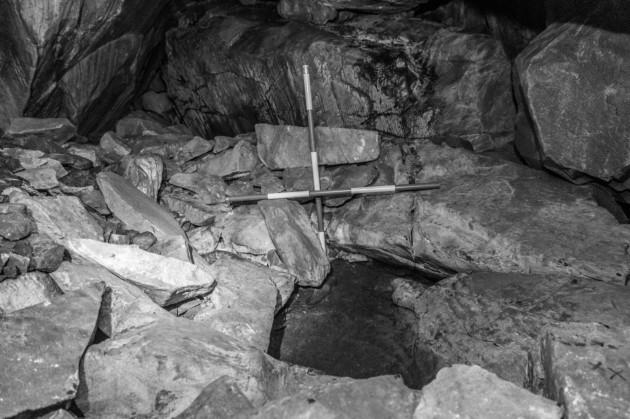
Ancient human remains found in Mayo date back over 5,000 years. Local hillwalker, Michael Chambers, came across the human bones in a rock-cut chamber among massive boulders in August 2016, while walking on Ben Gorm Mountain in the Nephin Beg range of west Mayo. The National Monuments Service, in consultation with the National Museum of Ireland, commissioned a rescue excavation, carried out by Dr Marion Dowd of IT Sligo.

Researchers concluded that the natural boulder chamber in which the remains were found was used for human burial practice during the Neolithic period. A least 10 individuals were placed in the chamber over a period of up to 1,200 years. One of the adult bones was dated to 3,600 BC, while a bone of a child skeleton dated to 2,400 BC.

Ben Gorm Mountain, Mayo
Image: T Kahlert via Department of Culture

Archaeologists believe that bodies were brought into the cave chamber and laid out in a pit. At some later stage, the skulls might have been deliberately broken as part of a complex burial ritual and the larger bones removed.

 “Large pieces of quartz had been placed in and around the bones. When the radiocarbon dates came through it was very exciting. Not only were the bones Neolithic, but the dates showed the site had been used for over 1,000 years,” Dr Dowd said.

Dr Dowd points out that it was not a burial site as such, but a ritual place where bodies were placed to decompose. Only a very small proportion of each skeleton was found, with most of the bones apparently deliberately removed.

 Pit in the cave which contained human remains after the excavation
Image: T Kahlert via Department of Culture

The Neolithic period was a time of change with a move from hunting and gathering to a more settled way of life associated with the beginnings of agriculture. Burial practices in this period entailed interment in large, highly visible monuments, and by ritual practices resulting in the scattering of human bones. These monuments were frequently built in the densely populated regions of the Mesolithic Period and may have been markers between the new and old peoples. They signified a lasting link between the community, the ancestral dead, and the land which they occupied.
It has been suggested that the shape of these ancient tombs is related to the type of housing favoured in an area (round, rectangular, trapezoid or irregular. Large communal monuments for the dead began to appear on the coastal fringes of Western Europe during this period.
More than 6,000 years ago, the Stone Age peoples of Western Europe began to build stone monuments over their dead as tombs and ceremonial places. This was the beginning of what has become known as the megalithic tradition of the Neolithic period.
The first small passage tombs on the summit of Knocknarea, Co. Sligo, were probably built in the first half of the fourth millennium BC, physically marking out the ritual significance of the place. A few hundred years later, the sacred space was defined by a complex system of banks along the eastern side of the mountain. The cairn known today as Miosgán Meadhbha (the legendary burial place of Queen Maeve) was probably built around this time and most likely covers a passage tomb.
High up on the north-western slopes of Knocknarea there are a number of natural caves, and in two of them human remains of Neolithic date have been found. These may have been places used for defleshing of the dead.  The caves might have played a role in the rituals linked to the monuments on the summit.
New insights into the funerary practices in ancient Ireland are being provided through studies led by a researcher at the Department of Anatomy at New Zealand's University of Otago.  The project applies modern techniques and research questions to human remains that were originally excavated more than 100 years ago. Researchers, lead author is Dr Jonny Geber, focuses on the 5000 years-old Passage Tomb Complex at Carrowkeel, also in County Sligo. This site is one of the most impressive Neolithic ritual landscapes in Europe.

Two of the tombs at Carrowkeel, Ireland. ( public domain )

             The team analysed bones from up to seven passage tombs that included both unburnt and cremated human remains from around 40 individuals. Dr Geber and his colleagues found that the unburnt bone displayed evidence of dismemberment.

"We found indications of cut marks caused by stone tools at the site of tendon and ligament attachments around the major joints, such as the shoulder, elbow, hip and ankle.”

According to Dr Geber, the new evidence suggest that a complex burial rite was undertaken at Carrowkeel, that involved a funerary rite that focussed on the "deconstruction" of the body.

"This appears to entail the bodies of the dead being 'processed' by their kin and community in various ways, including cremation and dismemberment. It was probably done with the goal to help the souls of the dead to reach the next stages of their existence."

This study shows that the Carrowkeel complex was probably a highly significant place in Neolithic society in Ireland, and one which allowed for interaction and a spiritual connection with the ancestors. The evidence suggests that the people of Neolithic Ireland may have shared similar beliefs and ideologies concerning the treatment of the dead with communities beyond the Irish Sea, according to the researchers, Dr Geber says.